

We never enjoy dealing with a serious roof problem. When your home needs repairs, things can feel overwhelming. Will a quick fix do? Or is it time for a full overhaul? A roof repair is not only a way to stop a leak but a way to secure your home’s future. How are you able to determine when it’s time to either replace or repair your roof?
We’ll explore the factors that impact the lifespan of your materials as well as the cost to help you make an educated decision that will protect your biggest asset.
Understanding Your Roof's Lifespan and Materials
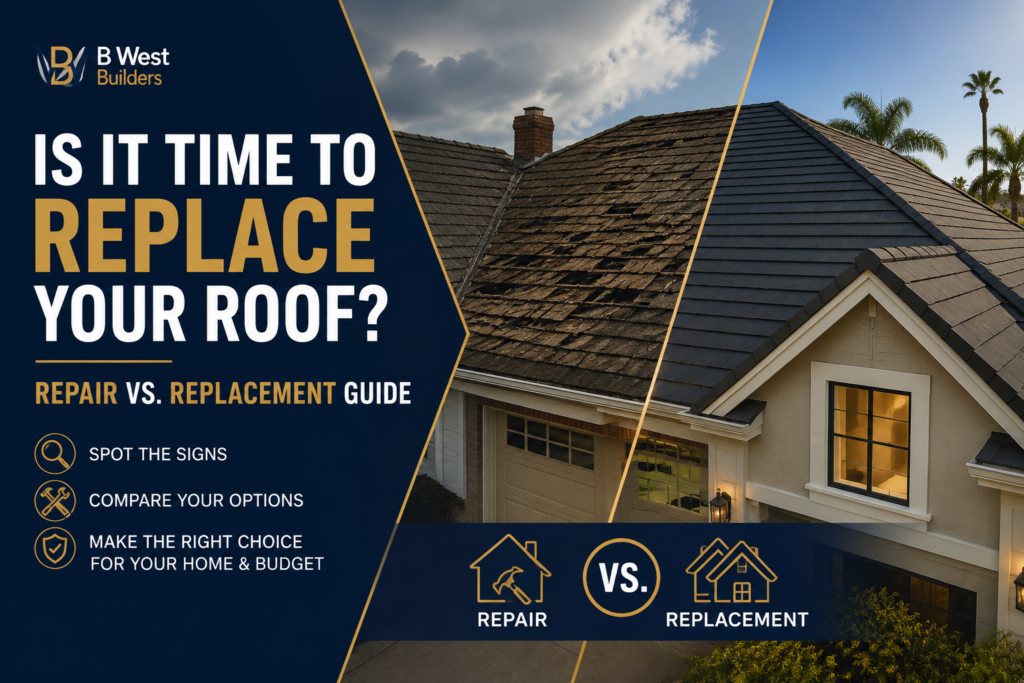
The Age of Your Roof: A Critical Factor
The age of your roof helps put context around every issue it develops. It’s generally not a great idea to spend money on minor repairs when your roof is nearing the end of its life. It is like a car with 200,000 miles on it that has a new tire, but the engine may quit next.
Asphalt Shingles: The 20-Year Rule
Most homes in LA have asphalt shingles. 3-tab shingles last 15 to 20 years on average. However, due to their thickness, architectural or dimensional shingles have an average lifespan of 25 to 30 years. Certainly, climate has an influence; the intense LA sun can accelerate wear. Shingles that curl, lose their granules, or break apart (especially if older than 15 years) are likely defective by age.
Premium Materials: Tile, Metal, and Slate
If your home has a tile, metal, or slate roof, you’re in luck. These premium materials can last for 50 years or longer, and some slate roofs even last over a century. Age itself is often not the primary replacement driver for these roof types. Most problems – from shingles buckling to leaks in the attic – arise from something specific: a fallen tree, bad installation, etc. Time by itself does not cause them.
How to Determine Your Roof's Exact Age
Identifying the specific age of your roof can help greatly. Start by looking at the home inspection reports you received during the purchase. Typically, permits are filed with the city’s Department of Building and Safety (LADBS) by former owners or builders indicating when it was installed. If those avenues prove fruitless, a professional roofing contractor can often help you determine the age of the roof based on wear of materials, type of shingle being used, and the condition of the underlayment.
Assessing the Damage: Localized Versus Widespread Failure
It is important to understand the extent of your roof’s problems. Is your roof experiencing an isolated malfunction that can be remedied with localized repairs, or are the symptoms of a full roof replacement a huge roof malfunction that you’re facing?
Repairable Issues: Shingles and Flashing Problems
Sometimes, the answer is simple. During a windstorm, a few shingles that ripped off are usually uncomplicated to replace, assuming the color can be matched up and the underlying deck is sound. Flashing problems are indicated by leaks due to the chimney, skylight, or vent pipe. The metal or plastic barrier that helps direct the water away from vulnerable parts is flashing. A seal failure around flashing is often a small problem that a tradesman can fix to keep the water out.
Signs for Replacement: Spongy Deck and Sagging
Other signs are serious. If you ever walk on your roof (exercise extreme caution and consider professional help for this), a spongy feel underfoot indicates a leak that has damaged the plywood decking under your shingles. This is a structural issue, not a cosmetic one. Visible sagging in the roofline is even more concerning. The roof decking or possibly the rafters likely fail; these are crucial load-bearing materials. You need a replacement rather than a repair. A repair won’t address the issue of structural integrity.
The "Granules in Gutters" Test
A little insider tip: check your gutters. A certain amount of granule loss on a new asphalt shingle roof is normal, but when you see a lot of grit or sand in your gutters, this is a big red flag. These tiny pellets shield your shingles from damaging UV rays. Heavy loss indicates that your shingles are breaking down and exposing your roof. Shortly, you may notice bald spots on the shingles themselves. A test like this means the roof is running out of life and has an endless losing battle with repairs.
The Cost Factor: Repair Versus Replacement
Who wants to pay for an expensive roofing repair or replace their roof unless necessary? You’re not merely fixing a problem; you’re investing. The cost of making temporary fixes can add up quickly if you are not careful.
The 50% Rule for Roofing Contractors
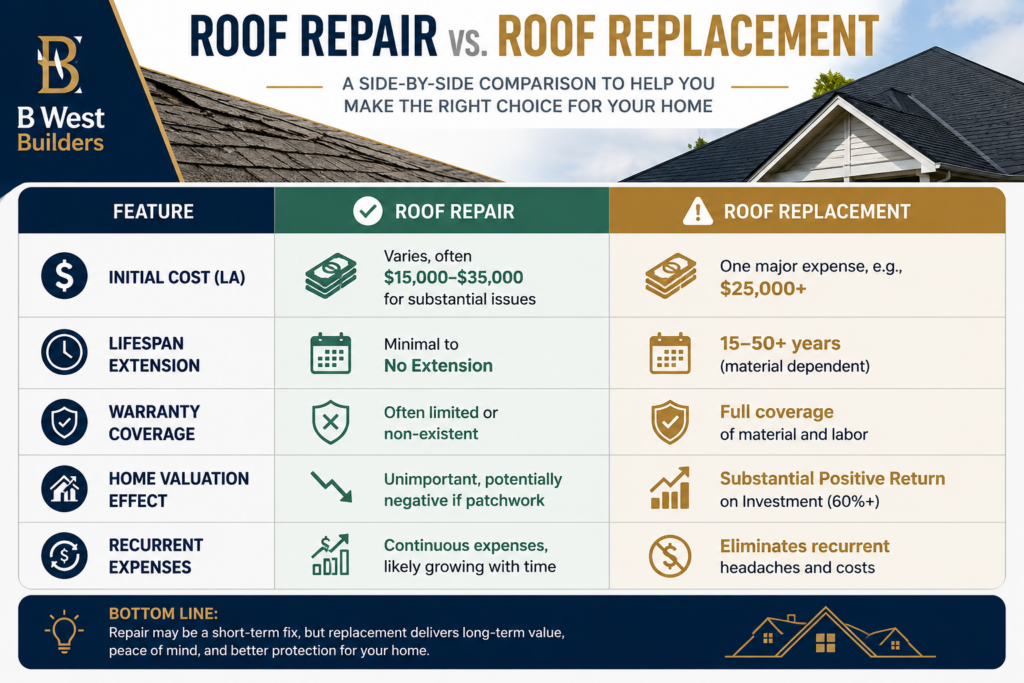
Roofing contractors often follow a general guideline: If your roof repair cost is more than 50% of the brand-new roof cost, it is almost always financially wiser to replace it instead. Because you are throwing a lot of money after a system that is almost dead. The repair cash has minimal long-term effectiveness and likely won’t prevent new problems from cropping up next year. For instance, if it costs $25,000 to do a full roof replacement and they quote $13,000 for a substantial repair, the 50% rule would point to replacement.
Hidden Costs of Multiple Repairs
The “patchwork” approach often winds up with many hidden expenses. You might find yourself chasing different leaks every few months, and each has a service call. Shingle mismatches (the most common unexpected outcome of repairs) can ruin your house’s looks and lower its value. If minor repairs are left unattended, underlying damage from water would go unnoticed. This might lead to rotting, mold, and compromise of the structure of the property, which would become more expensive to fix later. Invest in roof replacement to eliminate all recurrent headaches and costs.
Quick Comparison: Roof Repair vs. Roof Replacement
Beyond the Roof: Home Value and Future Plans
A roof is not just a roof but a system of your home. Opting to change it is not just about stopping leaks; it’s a decision that can affect energy efficiency, the value of your whole home, and your future.
How a New Roof Affects Resale Value
If you’re selling your home, getting a new roof is arguably one of the most effective things you can do. Many buyers will not consider homes that require serious roof work, as they see it as an immediate, expensive headache. A new roof that comes with a warranty takes that worry away; that makes your home much more attractive. Home improvement projects typically don’t come cheap. However, according to industry reports like Remodeling Magazine’s annual Cost vs. Value, homeowners can recoup a majority of their investments. Many times, at least 60%, and often just below 90%, of the cost of projects is returned through added resale value. This important selling point can speed up the sales process.
Energy Savings and Insurance Premium Opportunities
More than just protection, these modern materials deliver. Many new asphalt shingles and all-metal or tile roofs can be classified as “cool roofs.” This is particularly crucial in sunny Los Angeles. These materials reflect extra sunlight, preventing excessive heat absorption in your attic and home. What is the outcome? Reduced cooling expenses and a more pleasant indoor environment. Also, a roof replacement may reduce the premiums on your homeowner’s insurance. Numerous insurance companies that one is sure to come across offer discounts for new, impact-resistant, or fire-resistant roofing materials. This is more the case for places that are prone to specific weather events.
Coordinating with Other Home Renovations
Plan your roof replacement as part of your home improvement project. Are you thinking of putting in solar panels? Before you get solar panels, you almost always need a new roof. That is, the structure of your roof has to be able to support the panels, and you don’t want to have to take them off for a new roof years later. The roof color can also improve the curb appeal and design if you’re also repainting the exterior of your home. A planned roof replacement can be the basis for other major enhancements.
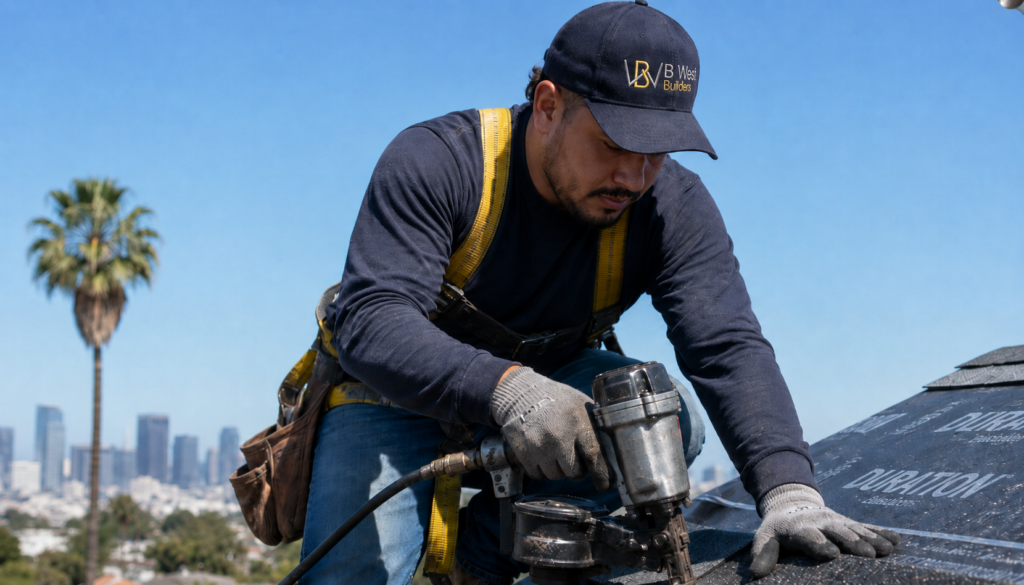
Finding the Right Partner: Choosing a Professional Roofer
When you choose to move forward with a roof replacement, you need a professional. Installing an in-ground pool is not something you can do alone. The installation is a big, complicated project requiring skilled labor, local code adherence, and licensing.
Licensing, Insurance, and Warranties Are Essential
Checking credentials should be your first step. Simply put, anyone who wants to work as a contractor in California should have a CSLB license from the California Contractors State License Board. You may verify the status of this license number online if it is valid and active. Importantly, they need to carry liability insurance, protecting you if they damage your property, and workers’ compensation insurance, protecting their employees from getting hurt (and you from being sued) if they are injured on your property. Make sure you know what warranties to expect. You’ll usually receive a material warranty from the manufacturer and a workmanship warranty from the contractor for their installation.
Key Questions to Ask During the Estimate
Feel free to ask specific questions when obtaining estimates. There are several important ones.
- Will you be removing the existing roof completely or installing over existing layers? A complete tear-off is usually preferred for a full replacement.
- What will the underlayment you’re using be and why? This essential component safeguards the roof structure.
- How will my landscaping be protected and what will the cleanup entail? (Helps maintain respect for your assets).
- What’s your project time frame, including any necessary permits?
Vetting a Roofer in Los Angeles: A Case Study
The contractor should be an expert in your locality. A professional contractor in the LA area will know Title 24 cool roofing for new installations and LADBS permit requirements that often take some time to navigate. So not just any roofing company will suffice. A professional contractor will be aware of common roof styles – such as the low-slope roofs seen on many mid-century homes in Silver Lake, Encino, and similar areas – and the best materials and installation techniques for them. Seek out contractors who have a solid record of local work and good word of mouth from your neighbors.
Deciding to replace your roof instead of repair it is a big step. However, it can provide you with long-lasting peace of mind and value. When trying to decide on a roof replacement, you should review the age of your roof, the extent of damage to it, the cost of ongoing repairs, and how a new roof fits into your plans for the home. By doing so, you empower yourself with an impressive amount of knowledge that will help you make the right call. The next thing you should do is schedule a roof inspection. Request multiple quotes and compare them carefully so you can hire a licensed, insured professional. This investment will safeguard your house and add value to it for years to come.
Frequently Asked Questions About Roof Replacement
How do I know if my roof needs repair or full replacement?
To determine if your roof needs repair or replacement, assess its age, the extent of damage, and the cost of ongoing fixes. Localized issues like a few missing shingles or flashing leaks are often repairable. However, widespread granule loss, a spongy roof deck, visible sagging, or an aging roof (over 15-20 years for asphalt) typically indicate a need for full replacement.
What is the "50% rule" for roof repairs?
The "50% rule" is a guideline roofing contractors often follow: if the cost of a substantial roof repair exceeds 50% of the cost of a brand-new roof, it is usually more financially prudent to opt for a full replacement. This rule helps homeowners avoid throwing good money after a roof that is nearing the end of its service life.
How long do different roofing materials typically last in Los Angeles?
In Los Angeles, 3-tab asphalt shingles generally last 15-20 years, while architectural shingles can last 25-30 years. Premium materials like tile, metal, and slate roofs offer significantly longer lifespans, often exceeding 50 years, with some slate roofs lasting over a century. The intense LA sun can influence wear on all materials.
Can a new roof really save me money on energy bills and insurance?
Yes, a new roof can lead to savings. Many modern roofing materials, especially "cool roofs" common in Los Angeles, reflect sunlight, reducing heat absorption and lowering cooling costs. Additionally, many insurance companies offer discounts for new, impact-resistant, or fire-resistant roofing materials, potentially reducing your homeowner's insurance premiums.
What credentials should I look for in a roofing contractor?
When choosing a roofing contractor, always verify they hold a valid CSLB license from the California Contractors State License Board. Ensure they carry both liability insurance (to protect your property) and workers’ compensation insurance (to protect their employees). Also, inquire about the material warranty from the manufacturer and the workmanship warranty from the contractor.
What are the most critical signs that my roof needs replacement?
Critical signs indicating a need for roof replacement include a spongy feel underfoot when walking on the roof (suggesting damaged decking), visible sagging in the roofline (pointing to structural failure), significant granule loss in gutters, and widespread curling, cracking, or missing shingles, especially on an older roof. These issues often signify structural compromise or material breakdown beyond simple repair.
Ready to Safeguard Your Home and Future?
Don’t let roof problems compromise your biggest asset. Make an informed decision that provides long-lasting peace of mind and value.
Why Choose a Professional Roofing Contractor:
- Licensed & Certified Professionals with Local LA Expertise
- Comprehensive Feasibility Studies to Save You Money
- Proven Track Record in Complex Hillside & Urban Builds
- Transparent Pricing & Clear Communication Throughout Your Project
Get Started Today:
- Call: (213) 410-4183
- Schedule: Book a complimentary property assessment online
- Special Offer: Ask about our current financing options!
Serving Los Angeles homeowners with trusted roofing solutions. CSLB Licensed & Fully Insured.