

Whenever you decide to invest in your home, it is always a big one. And especially when it concerns something as important as your roof. Many homeowners in Los Angeles feel a sense of dread in the summer: high cooling bills. What if the roof at your home could cool the heat? Wouldn’t that lower your energy expenditure while making your house comfy? This is the promise of energy-efficient roofing solutions.
This guide will show you the science and savings, along with the smart choices you can make to turn your roof into a powerful, money-saving device. You will understand how to choose the right materials and, importantly, how to select a good contractor in a competitive market.
What is an Energy-Efficient Roof? More Than Just a Buzzword
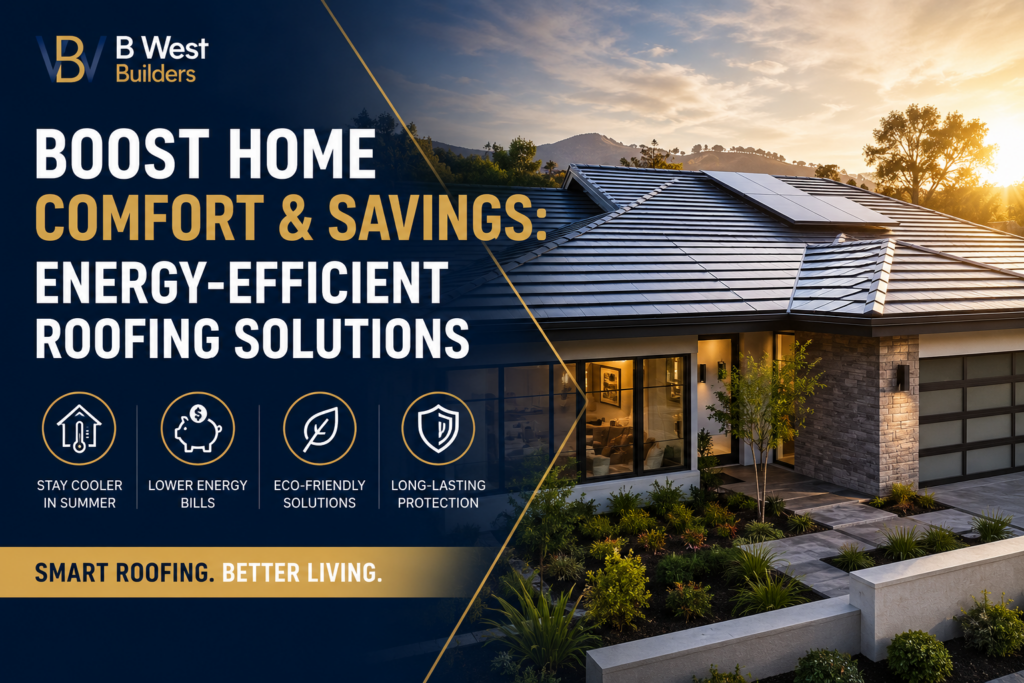
This expression isn’t just marketing speak; it’s serious business. It’s a planning system that prevents the sun from absorbing heat into your home. The result is energy savings you will enjoy on your utility bill. Work smarter, not harder against the California sun.
The Cool Roof works on the principle of roof reflectivity and also roof emissivity.
Consider this: on a hot day, would you prefer to wear a black shirt or a white shirt? The white shirt reflects the light, making you cooler. “Cool roof” works on this principle too. It employs special materials and coatings to reflect sunlight and quickly release absorbed heat. Solar reflectance is the process by which a roofing surface and the attic below stay cooler. The cool attic reduces the temperature of the living space, which helps the AC not work as often.
Important Concepts to Understand: SRI, Emissivity, Albedo
When looking at the roofing materials, you will find some technical terms. Make an informed choice by learning about them.
- SRI: Stands for solar reflectance index, and it is a measure of a surface’s ability to reflect solar heat (solar reflectance) and emit heat (thermal emittance). The higher the SRI, the cooler the roof gets.
- Thermal Emittance is a measure of how much heat is emitted by a material. A high emittance is a good thing; it means a roof won’t hold onto heat.
- The term “albedo” or solar reflectance measures the amount of solar radiation that gets reflected off a surface.
To maximize efficiency, choose high SRI and thermal emittance value materials.
Look for ENERGY STAR® and Other Certifications
How do you determine whether a product works? Seek third-party certifications. If a roofing material is ENERGY STAR® certified, then it meets the appropriate standards with regard to solar reflectance and thermal emittance. One of the key resources is the Cool Roof Rating Council (CRRC), a non-profit group that maintains an independent rating system for the radiative properties of roofing products. These certifications help you identify good products that really work.
How Much Can You Actually Save with Tangible Benefits?
The biggest question on the minds of any homeowner is always, what is in it for me? An energy-efficient roofing solution can provide concrete, measurable benefits that will impact your wallet and comfort.
Effect on Cooling Costs During Summer
You’ll notice immediate savings on your energy bill. According to experts, a cool roof can lower air temperatures by 50°F at the roof surface. This, in turn, reduces the cooling demand for your home by 10-15%. Saving hundreds of dollars, year after year, each summer, in a typical home in Los Angeles. The savings amount adds up fast.
Cutting Down HVAC Load and Improving Its Life
Your air conditioning unit works hard, particularly during the long, hot summer months. When your attic is cooler, your AC doesn’t have to work as hard or as long to keep temperatures inside comfortable. As a result, there is much less wear and tear on your unit, which minimizes repair costs and extends the life of your HVAC system. It’s a major victory given that a new AC might cost $3,500-$7,500.
Improve Your Home Standards and Property Value
You will also experience an enhanced level of comfort inside your home. You won’t have hot spots or rooms that refuse to cool down. Having controlled temperatures indoors is more comfortable for us. Also, an energy-efficient roof is a huge selling point. This roof upgrade can also increase your home’s resale value when you sell. More and more buyers want sustainability and cost savings.
Best Energy-Efficient Roofing Materials for Residential Homes
When it comes to selecting materials, you can choose from a range of excellent options with different efficiencies, prices, lifespans, and appearances.
Cool Asphalt Shingles: The Economical Option
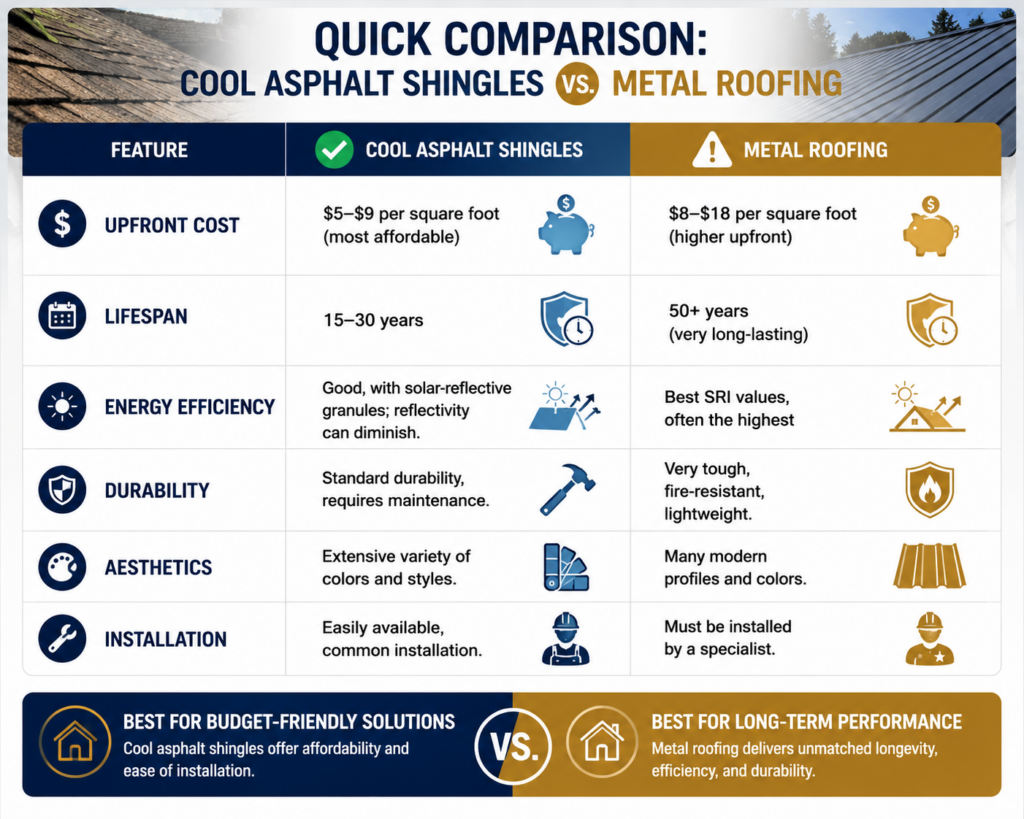
Asphalt shingles are common because they are inexpensive and easily available. The latest cool asphalt shingle varieties offered on the market employ special solar-reflective granules designed to bounce sunlight away from the roof, thereby enhancing their energy performance.
- Efficiency: Great, especially for a traditional asphalt shingle.
- The average cost of installation is around $5-$9 per square foot.
- Lifespan (15-30 years).
- Most affordable upfront cost with an extensive variety of colors and styles.
- Its lifespan is comparatively shorter than the other cool roofs. If solid maintenance is not done, its reflectivity can diminish somewhat.
Metal Roofing (Steel & Aluminum): Strong Yet Cost-Effective
Sturdy and a powerhouse of energy-smart advantages! They naturally reflect solar radiation and often contain integral pigments or reflective coatings that enhance these properties.
- Efficiency – Best SRI values, often the highest
- The average cost is between $8-$18 per square foot installed.
- Expected lifespan exceeds 50 years
- Pros: It is very tough and fire-resistant. Lightweight and great at reflecting heat too. Comes in many modern profiles and colors.
- Cons include that the cost can be higher upfront, noisy during heavy rain or hail, and must be installed by a specialist.
Concrete and Clay Tiles: Old-School but Naturally Cool
These materials traditionally possess cooling properties. The mass and often curved shapes of these products create an air barrier that slows heat transfer into the attic. Lighter shades enhance their natural reflectivity.
- The efficiency of a tile is very good thanks to its mass, airflow, and natural reflectivity of the material – especially in the lighter shades.
- Installing will cost you roughly $10,000 to $20,000.
- Lifespan: 50-100+ years
- Pros: Extremely durable, aesthetically attractive, good insulator, and naturally fire-resistant
- Often requires structural reinforcement (an added cost), can be brittle under impact.
TPO and PVC Membranes: An Updated Flat-Roof Solution
For the flat or low-sloped sections of your home, including patio and garage additions, single-ply membranes such as thermoplastic polyolefin (TPO) and polyvinyl chloride (PVC) are optimal. Most of the time, they are white and provide extremely high solar reflectivity.
- Outstanding Efficiency, especially for the white membranes.
- Price usually ranges from $6.00 to $12.00.
- Expect a lifespan of 20-30 years.
- Benefits of TPO roofing on flat roofs. Lightweight. Highly reflective. Durable and puncture-resistant
- The steep slope can prevent the type of installation required for main residential roofs.
The Key Role of Insulation & Ventilation in Future Buildings
The concept of energy efficiency remains the same; that is, reflect heat and reduce absorption. However, commercial roofing is a different ball game compared to residential. It’s useful to understand the difference, as many property owners have both types.
The Engineering Requirements of Flat and Sloped Roofs Differ
The obvious difference is in the geometry. Residential roofs are mostly sloped to shed water efficiently. Commercial roofing systems are typically flat or low-slope; they require special materials and techniques to prevent ponding of water and ensure watertight integrity. The choice of material and geometry is dictated by this fundamental difference.
Popular Commercial Roofing Materials (TPO, EPDM)
Flat roofs are an excellent option for single-ply membranes at commercial buildings. TPO and EPDM prove to be the best options for flat roofing systems. The white TPO possesses the best solar reflectivity, making it ideal for energy-efficient commercial buildings. These materials are applied in sheets and are usually fastened or glued over large areas.
Factors That Could Affect the Sustainability of Your Utility Bills
Commercial roofing generally gets more foot traffic and HVAC and other roof installations. This requires a more intensive maintenance program, including seam quality, drainage systems, and more regular inspections for punctures/tears. While a residential roof might get inspected by professionals every few years, most commercial properties require annual or semi-annual inspections to prolong the life of the roof.
How to Choose the Right Contractor for Your Project?
When it comes to your project, choosing a roofing company in Los Angeles is one of the most important steps you’ll take. How well the installation is done can affect the longevity of your roof as well as the energy efficiency of your home. Never choose the lowest quotation without proper investigation.
Check the Vendor’s Licensing, Bonding, and Insurance
What is your first step? Always check credentials.
- Make sure your contractor has a CSLB license in California, i.e., a C-39 roofing contractor license. For your convenience, you can verify this online.
- Bonding: A contractor’s bond protects you if they don’t finish the job or follow the contract.
- The contractor must have insurance to cover damages from their work. Insurance protects them in case anything goes wrong while they work on your property. For starters, they must be insured to cover damages to your property. Moreover, the worker must also have workers’ compensation insurance. This protects their workers and also saves you from liability in case a worker gets injured on your property. Paying 50% up front? Walk away. In California, deposits are limited to the lesser of $1,000 or 10%. If you hire an unlicensed contractor for `less expensive` work, you won’t have any insurance coverage, you may get shoddy work, and you’ll take on considerable legal liability.
Analyzing Portfolios and Client Reviews
See past a few flattering reviews. Request a selection of comparable past work. Firsthand, this allows you to judge the quality of their work. Consult internet reviews on varied platforms like Google, Yelp, and the Better Business Bureau. Notice their reaction to negative feedback; a transparent organization will deal with red flags professionally.
What to Ask a Potential Roofing Company?
When requesting quotes, ask specific questions.
- Can you recommend a few energy-efficient roofing solutions for my home? Why?
- Which material brands do you use and what are the SRI / emissivity ratings?
- Who will oversee the project, and how will we communicate with each other?
- What warranty do you provide on your labor as well as the materials?
- What is your estimated timeline for completion and permit acquisition?
What to Look for in a Roofing Company in Los Angeles
When you are hiring a roofing company in Los Angeles, ask them if they have experience with Title 24. This refers to the California energy code. Since they are updated regularly, a knowledgeable contractor will incorporate them into your project. Check local permitting processes that are made by LADBS (Los Angeles Department of Building and Safety). Permits often take time, but a pro can expedite the system better.
Tips to Maintain and Ensure Maximum Efficiency of Your Roof
Your roof that consumes less energy is an investment. Promoting the longevity of your roof system requires preventative maintenance to prevent unplanned failure and high costs.
Importance of Semi-Annual Inspections
Twice a year, ideally in spring and fall, walk around your house. From the ground, look for any missing shingles, debris buildup, and visible damage. A quick check is always ideal after strong winds or heavy rain. Get a professional roof inspection every few years or right away if you see a problem. If you are not able to notice the sore points, they can catch them.
Regular Cleaning of Your Roof
Over time, your roof’s solar reflectivity can be reduced by dirt, algae, and moss, which affects its energy performance. Regular cleaning of the roof surface can help ensure efficient performance of the system. Climbing on the roof can be dangerous. Never attempt to clean your roof or carry out any other work on it. You can hire a professional who has the right gear to ensure safety while cleaning. Further, a professional knows the right gear and possesses the skills to do such jobs efficiently.
Keep Your Gutters and Drains Free From Dirt and Debris
Clogged gutters and drains can be the silent killer for any roof, even an energy-efficient roof. When water cannot drain properly, it backs up, leading to possible leaks, damaged fascia, and even foundation problems. You need to clear your gutters regularly. Especially after heavy leaf fall. This helps your home manage water properly. In addition, this helps your entire roofing system.
Summary
One of the best investments a homeowner can make is opting for an energy-efficient roofing system. The system is all-inclusive and will significantly reduce your utility bills, enhance your HVAC system’s longevity, and significantly improve your comfort and home value. Your chosen roof that is best for you depends on your budget, your house style, and climate needs.
Now that you have learned the benefits and options, you can use this information to begin collecting estimates from qualified, licensed contractors. Use contractor-vetting questions to avoid hiring a shoddy and unreliable roofing company in Los Angeles. Energy efficiency requires special modern materials and coatings.
Quick Comparison: Cool Asphalt Shingles vs Metal Roofing
Frequently Asked Questions About Energy-Efficient Roofing
How much can I save with an energy-efficient roof?
An energy-efficient roof can significantly reduce your home's cooling demand by 10-15%, potentially saving hundreds of dollars on your energy bills each summer. It also lowers roof surface temperatures by up to 50°F, reducing the workload on your HVAC system and extending its lifespan.
What is the average cost to install an energy-efficient roof?
The cost varies by material. Cool asphalt shingles typically range from $5-$9 per square foot, while metal roofing can be $8-$18 per square foot. Concrete and clay tiles are often $10,000-$20,000 for installation, and TPO/PVC membranes are $6-$12 per square foot.
How long do energy-efficient roofing materials last?
Lifespans differ significantly. Cool asphalt shingles generally last 15-30 years. Metal roofing boasts an impressive lifespan of over 50 years. Concrete and clay tiles can last 50-100+ years, while TPO and PVC membranes typically have a lifespan of 20-30 years.
What certifications should I look for in energy-efficient roofing products?
Always look for ENERGY STAR® certification, which indicates the product meets specific standards for solar reflectance and thermal emittance. Additionally, check for ratings from the Cool Roof Rating Council (CRRC), a non-profit organization that provides independent ratings for roofing product properties.
Why is attic ventilation important for an energy-efficient roof?
Proper attic ventilation is crucial because it allows superheated air to escape, preventing heat buildup that can negate the benefits of a cool roof. A well-ventilated attic, combined with good insulation, ensures that the cool roof system works optimally to maintain comfortable indoor temperatures and reduce AC usage.
How do I choose a reliable roofing contractor in Los Angeles?
When selecting a roofing company in Los Angeles, verify their CSLB license (C-39), bonding, and workers' compensation insurance. Ask for references, review their portfolio, and check online reviews on platforms like Google and the Better Business Bureau. Ensure they have experience with California's Title 24 energy code and local LADBS permitting processes.
Ready to Achieve Ultimate Home Comfort & Savings?
Stop dreading high summer cooling bills. Upgrade to an energy-efficient roofing system and transform your home into a comfortable, cost-saving sanctuary.
Why Choose a Professional Roofing Contractor:
- Licensed & Certified Professionals with Local LA Expertise
- Comprehensive Feasibility Studies to Save You Money
- Proven Track Record in Complex Hillside & Urban Builds
- Transparent Pricing & Clear Communication Throughout Your Project
Get Started Today:
- Call: (213) 410-4183
- Schedule: Book a complimentary property assessment online
- Special Offer: Get a Free Roof Inspection & Energy Audit!
Serving Los Angeles homeowners with trusted roofing solutions. CSLB Licensed & Fully Insured.