

In Los Angeles, homeowners desire open kitchens, bright living areas, and seamless indoor/outdoor spaces. You can picture that idyllic deck that overlooks the canyon or a contemporary Spanish Colonial beauty. If you are not careful, that dream could turn into a nightmare price-wise. To make your vision happen without the headaches, you need to avoid the top remodeling mistakes Los Angeles homeowners regret.
Overlooking LA Permitting and Zoning Intricacies
Renovating in Los Angeles is not just big, it is bureaucratic too. One of the most common remodeling mistakes we make is underestimating local regulations and their intricacies. What would fly in other cities could likely receive a stop-work order here.

The High Cost of Skipping Permits in LA
Essentially, it is a mistake more frequently made in LA, so the cost is higher. Picture this: you spend $20,000 for a new deck and then receive a citation from the Los Angeles Department of Building and Safety (LADBS). If you don’t have the right permits in place, expect to pay heavy fines, usually around $10,000. You’ll likely be ordered to destroy and rebuild, which will double your overall costs and timeline. It’s not far-fetched; it happens to homeowners all the time who think they can skip the process.
Working with HPOZ and Neighborhood Councils
Are you planning a remodel in Hancock Park, Silver Lake, or other Historic Preservation Overlay Zones (HPOZs)? You are not limited to LADBS. There is an extra layer of aesthetic and historical review in these areas. A specialized architect or contractor that knows HPOZ requirements is crucial. Architects are proficient in preserving historical integrity and achieving functional modernism, saving substantial time delays and redesigns.
Not Understanding Seismic Retrofitting Requirements
Californian life comes with seismic risk. For homeowners in Los Angeles, seismic retrofitting is not an upgrade but a necessity for safety and property value. This is particularly true for older homes built before modern codes.
What Today’s Codes Require Beyond Bolting It Down
Modern seismic codes have evolved over the years, requiring more than just foundation bolting during a major remodel, which typically takes you by surprise. Consider shear walls, cripple wall bracing, and sophisticated anchoring systems for foundations. These aren’t small changes – they may even involve serious work designed to stop your home from moving off the foundation as an earthquake happens.
The Financial Mistake of Not Shaking It Right
If seismic needs aren’t addressed during a remodel, it’s a “pay now or pay much more later” situation. Not doing this can make your house a big safety hazard. If you deal with it later, you also incur far greater costs, or worse yet, it can make it harder to sell your home when inspectors flag non-compliance. Putting $15,000-$40,000 toward the right retrofitting of the renovation is a good investment.
Hiring an Unlicensed or Unfamiliar Contractor
One of the most important pieces of home remodeling advice is to rightly choose your contractor, as it can make or break your project. In a competitive market like LA, two mistakes tend to be common: accepting a low bid from an unlicensed worker and hiring a firm that is not familiar with LA issues.
The Dangers of Unlicensed Contractors
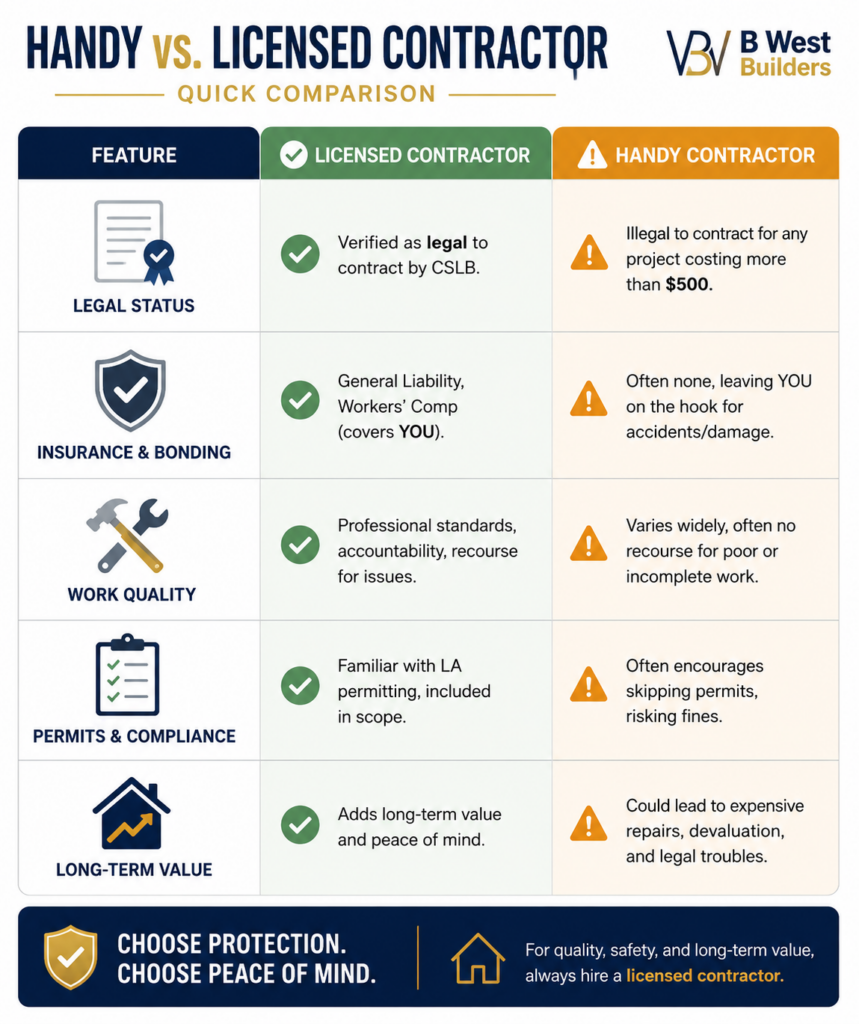
An unlicensed contractor might charge less initially, but this deal holds significant dangers. They do not have insurance, bonding, and are not held accountable. You are liable if the worker gets injured on your property. If the work is of bad quality or incomplete, you have little power. Always check their CSLB license (California Contractors State License Board), request proof of insurance, and check references specifically in your zip code.
A Pro from Beverly Hills May Mess Up in Venice
Los Angeles is noted for its diversity. A contractor known for luxury new builds in Beverly Hills might have trouble with a job in Venice because that beachfront property requires expertise in coastal corrosion, and a hillside house in Silver Lake might face soil stability issues. Search for a contractor who has worked on homes in your own neighborhood or those with a similar style.
Quick Comparison: Handy vs. Licensed Contractor
Designing Without Respect for Neighborhood Character
The rich architectural heritage of LA is quite charming. A remodeling error that creates a design mismatch with the surroundings causes monetary and social regrets.
From Spanish Colonial to Mid-Century Modern Design
Picture this: a slick, ultra-modern box dropped onto a street full of delightful 1920s Spanish bungalows in Pasadena. Or a mock-Tuscan villa that’s in a Mar Vista Mid-Century tract. Architectural mismatches stand out, but for the wrong reasons. Valuing the predominant style does not stifle creativity but channels it wisely. A great designer can merge contemporary updates with the existing architectural language.
How Unfavorable Design Can Affect Property Value
Real estate appraisers adhere to a principle called “conformity.” They usually find homes that fit the aesthetic of the neighborhood hold or gain value better than homes that do not fit that aesthetic. A design that’s discordant with your home can have a negative impact on appraisal value and cause marketability issues later. “The market in your neighborhood has certain expectations, and you must uphold them.”
Overlooking the Importance of Indoor-Outdoor Living
Southern California is where effortless indoor-outdoor living was made. Not planning for this specific desire during your remodel is a missed opportunity and a common regret of LA homeowners.
Seamless Flow Through Sliding Glass Doors
A patio extension isn’t simply a new patio. An integrated indoor-outdoor design uses modern solutions such as bifold or pocketing door systems designed to completely disappear for large openings. Look for flooring materials that flow from inside to out and blend seamlessly. The objective is to make functional “outdoor rooms” which you can treat like spaces in your house.
Year-Round Use with Smart Media Planning
Los Angeles usually has lovely weather, but you still need to check first. Include pergolas or awnings for shade in a hot summer. Installing outdoor heating, like built-in fire pits and overhead heaters, will enable you to make use of your outdoor area even in the cooler evenings. Choose materials that are tough and UV-resistant and which will stand up to sun damage.
Selecting Materials Not Meant for LA's Climate
Los Angeles features intense sunlight, chlorine from the city, and salt from the coastal breezes. Choosing beautiful yet unsuitable materials that cannot survive these circumstances is a remodeling blunder that causes early breakdown and costly replacements.
UV-Resistance is Key for California Sun
The sun in California is strong. Large windows of homes and apartments can bleach dark wooden floors unevenly. Low-cost siding could warp, and paints could chalk and fade quickly. UV-resistant flooring, siding, and paint are the best choices. High-quality engineered woods, acrylic paints, and fiber-cement siding are better long-term investments than cheaper options.
A Caution for Seafront Towns: Coastal Corrosion
Salt spray is a silent destroyer if you’re west of the 405, especially near the ocean. It eats away at metal fittings, window frames, and hardware. For homes in Santa Monica, Marina Del Rey, or Venice, anything that is exposed to the elements needs to be specified in marine-grade stainless steel (316 grade), solid bronze, or powder-coated aluminum. These materials do not rust and stay clean for years.
Failure to Budget for the Los Angeles Premium
Here’s a sampling of experiences from my LA adventures and what you can expect. It is not just general inflation one should be worried about. There’s an “LA premium” that some homeowners don’t factor in, resulting in going over-budget again and again.
Why National Cost Averages Are Irrelevant
Don’t depend on national remodeling cost averages. They simply don’t apply here. Reasons causing rising costs in the LA metro area include:
- Skilled trades require higher labor wages.
- Traffic jams affect delivery times and material costs.
- Modifying material access on property sites involves challenges that come with costs.
- Costs more to dump construction debris.
Be prepared to spend $150-$300 per square foot for a complete renovation. Kitchens will generally run $30,000-$80,000 while bathrooms will generally cost $15,000-$45,000 with quality work.
The 20% Rule for Contingency Funds
For older Los Angeles homes (built before 1970), include a 20% contingency fund. Once you open walls, you’ll find surprises, which has been experienced countless times. Among the most frequently-encountered problems are outdated knob-and-tube wiring, hidden termite damage, asbestos, or unpermitted additions by past owners which necessitate expensive remediation and re-permitting. Include this in your budget from the start.
Ignoring Water-Wise Design and Title 24 Energy Efficiency
The building regulations in California are very conscious of the environment. It is a big mistake to overlook water-wise design and Title 24 energy efficiency. Homeowners should know that compliance is not a burden; rather, it is an investment that increases the value of a home and lowers utility bills.
Incorporating Water-Saving Beyond the Lawn
There is more to water saving than exchanging your lawn for drought-copious plants. Include low-flow fixtures in all bathrooms and kitchen sinks. Investigate greywater systems for irrigation. Look into permeable pavers for driveways and patios to reduce runoff. These selections are examples of responsible stewardship and can often qualify for rebates from local governments.
Grasping the Energy Title 24 Requirements
California’s Title 24 energy code imposes standards on high efficiency for new building and major renovations. This refers to high-performance windows, better insulation (R-38 in attics), and energy-efficient HVAC systems, such as heat pump water heaters, which are frequently required for updates to 2024. Though these appliances may cost more, they save energy and make your home more comfortable in the long run.
Overlooking Smart Home and Future-Proofing Tech
Failing to incorporate smart home infrastructure into a major remodel in 2024 and beyond is a blunder that will be regretted. Your living style and resale value are impacted.
It’s More Cost-Effective to Wire Than Redesign
The main idea is simple enough; running the wires while walls are open is much cheaper than tearing them out later. Your major rooms should be pre-wired for Wi-Fi access points, security cameras, distributed audio, and window shade automation. This establishes an adaptable framework for any smart technology you may wish to add at a later date and without great expense.
Technology That Truly Matters in Los Angeles
Homebuyers in the LA area love certain smart home technologies. Smart thermostats, for instance, offer big energy savings in our climate. Automated lighting will improve safety and convenience. Make sure your garage is set up for an EV charging station. By pre-wiring your house for a 240-volt outlet, you can now make future EV ownership easier while also making your house more marketable.
Attempting to Live in Your Home During Major Renovation
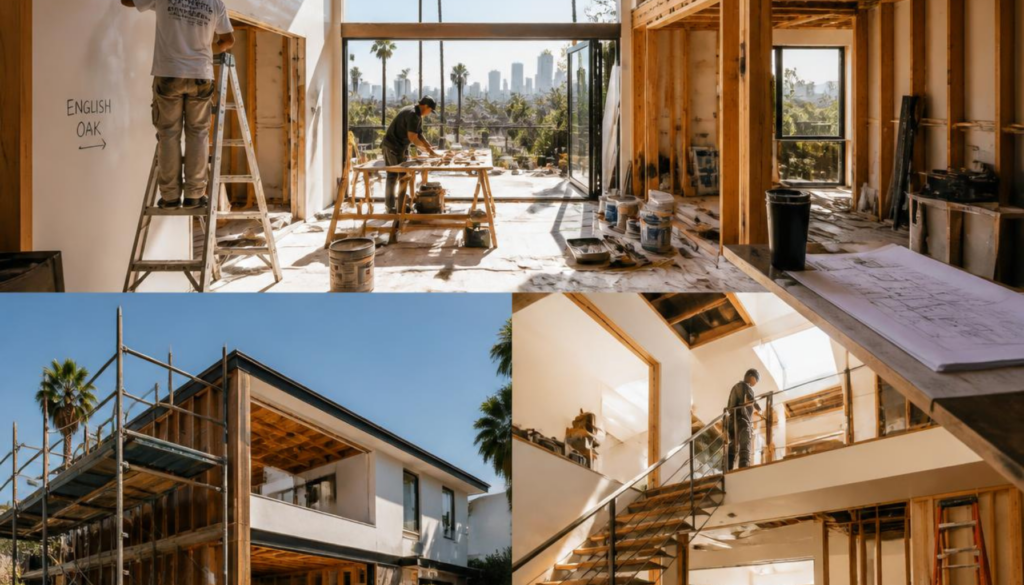
While it’s understandable to want to save money on temporary housing, the attempt to stay in the house during a major renovation is one of the most common home remodeling mistakes, negatively affecting mental health, relationships, and project timelines.
The Reality of Dust, Noise, and Delays
By 7 AM, loud hammering and sawing will start, dust will permeate through every corner of your home, through plastic sheets, privacy will be an issue, and once in a while, water or electric will be shut down. Everyday life becomes almost impossible. It’s not just uncomfortable; it can strain relationships and cause serious homeowner fatigue.
Projects Can Slow Down Due to Living On-Site
From a contractor’s point of view, an uninhabited house is a more effective workplace. A contractor or building crew can work extended hours and move materials around as needed. They can also do away with the daily cleaning the family would require from them. When not living on-site, your project tends to move faster and faces fewer logistical challenges. To ensure the success of your project, budgeting for a short-term rental offers many benefits.
A remodeling process in Los Angeles can be a huge success. It’s essential to partner with someone local who understands the challenges involved. When Los Angeles homeowners avoid these remodeling mistakes, they can protect their investment and create their dream home. Get in touch with us now for a consultation about your project so that it may be successful from day one.
Frequently Asked Questions About Remodeling in Los Angeles
How much do permits cost for a remodel in Los Angeles?
Permit costs for a remodel in Los Angeles vary significantly based on the project's scope and location. Minor projects might cost a few hundred dollars, while major renovations, especially in HPOZs, can involve thousands in fees. Skipping permits can lead to fines of $10,000 or more, plus the cost of rebuilding.
What is seismic retrofitting and why is it important in LA?
Seismic retrofitting involves strengthening a home's structure to better withstand earthquakes, often including foundation bolting, shear walls, and cripple wall bracing. It's crucial in LA due to high seismic activity, protecting both safety and property value, especially for older homes built before modern codes. Expect to invest $15,000-$40,000 for proper retrofitting during a renovation.
How can I verify if a contractor is licensed in California?
To verify a contractor's license in California, always check with the CSLB (California Contractors State License Board) online. Request proof of general liability and workers' compensation insurance, and ask for local references, ideally from your specific zip code or neighborhood, to ensure their familiarity with LA's unique challenges.
How long does a typical home remodel take in Los Angeles?
The duration of a home remodel in Los Angeles depends on its complexity. A kitchen or bathroom remodel might take 6-12 weeks, while a whole-home renovation can span 6-12 months or more. Factors like permitting delays, material availability, and unforeseen issues in older homes can extend timelines, making a flexible schedule and a 20% contingency fund essential.
What is the "LA premium" in remodeling costs?
The "LA premium" refers to the higher remodeling costs in Los Angeles compared to national averages, driven by factors like elevated labor wages for skilled trades, increased material costs due to traffic and delivery challenges, and higher construction debris disposal fees. Homeowners should budget $150-$300 per square foot for comprehensive renovations, with kitchens ranging $30,000-$80,000 and bathrooms $15,000-$45,000.
Why is indoor-outdoor living so crucial for LA home remodels?
Indoor-outdoor living is crucial for LA home remodels because it maximizes the region's desirable climate and enhances lifestyle. Integrating spaces with features like bifold doors, consistent flooring, pergolas, and outdoor heating creates functional "outdoor rooms" that are highly valued by homeowners and significantly boost property appeal and resale value in the Los Angeles market.
Ready to Build Your Perfect Home in Los Angeles?
Why Choose Our Expert Team:
- Licensed & Certified Professionals with Local LA Expertise
- Comprehensive Feasibility Studies to Save You Money
- Proven Track Record in Complex Hillside & Urban Builds
- Transparent Pricing & Clear Communication Throughout Your Project
Get Started Today:
- Call: (213) 410-4183
- Schedule: Book a complimentary property assessment online
- Special Offer: Ask about our current financing options!
Serving Los Angeles homeowners with integrity and excellence.