

Most homeowners envision their renovation or new build process to be plain sailing. Unfortunately, this doesn’t always happen as planned, and unexpected costs do arise. The unforeseen expenses associated with building can upset your plans and cause a halt to operations.
Picture this: you’re well into a kitchen renovation, and after the demolition, the crew finds termite damage throughout the entire kitchen. Or maybe an inspection requires a mandatory electrical upgrade you never accounted for. Financial shock can turn a surprise into a nightmare. This manual provides a game plan to ensure your investment is secure, how much you should be putting away, what affects that number, and what to do with it.

What Is a Construction Contingency Fund (And Why Is It Non-Negotiable)?
Treating a contingency fund as “extra money” will greatly reduce its impact. Think of it like insurance for your project. Unforeseen circumstances are a special part of your budget, set aside to deal with changes or events that come up in construction. It’s the thin line that separates a petty inconvenience from a major catastrophe.
Use this fund to help your project stay on track even when something comes up; it’s not just for a rainy day. It lets you tackle challenges without settling for less or making costly changes midway through the project.
Not having a contingency plan can have serious consequences. You will likely experience delays in the project, having to use cheaper and inferior-quality materials, getting work unfinished, or having to pay steep bills, sometimes even ending up taking on high-interest debt to pay for essential repairs.
The 5 Most Common Issues That Cause Surprising Construction Costs
Knowing why projects incur extra expenses can help you. Events can be classified into categories in a predictable way.
1. Subsurface Conditions
These are surprises found after walls come down or ground is broken. Pristine drywall can be concealing undetected water damage, mold, asbestos, outdated knob-and-tube wiring, and crumbling foundations. Substandard soil conditions beneath new construction projects can lead to costly remediation measures.
2. Changes in Design and Scope Creep
While you may love your first design, seeing it realized usually generates new concepts. Shifting an interior wall even a few feet is a “small” change in the construction world. However, these kinds of changes create a domino effect, impacting electrical, plumbing, HVAC, and flooring. Suddenly there’s more labor, materials, and timeline delays.
3. Fluctuations in Material Pricing
Market forces are beyond your control. Disruptions in the supply chain, inflation, or an unexpected increase in demand can increase the costs for essential materials such as lumber, specialized fixtures, or even generic drywall. These changes can be difficult, especially for long-term projects.
4. Permits and Inspection Problems
Even with careful planning, things are often uncovered by your local LADBS. An inspector could ask for any extra work not in your original plan to bring old parts of your home to code. This is particularly true, especially in a place like Los Angeles that has strict seismic requirements.
5. Coordination Issues or Subcontractor Errors
Trusted building contractors in Los Angeles try their best to do their job precisely, mistakes sometimes happen since the labor is human after all. A measurement mistake or failure of a specialist or trade could cause rework, which would incur extra costs.
Industry Standard: How Much Contingency Should You Allocate?
What you put aside is the million-dollar question. This doesn’t have one perfect number. The right contingency percentage for you will depend on your project size and risk.
10% for New Builds
For new builds, where you’re starting with new materials in a controlled environment, you should generally budget for a contingency of about 10%. While there are fewer hidden surprises, problems with soil conditions, minor design changes, or unexpected permit requirements can still arise.
15-20% for Major Renovations
The risk of remodels and additions is higher because hidden conditions may be present in existing structures. If you’re undertaking a complete remodel of a bathroom or kitchen, or adding square footage, a 15% to 20% buffer is a more reasonable and safer bet. Most homeowners in LA will be in this range.
25%+ for Historic and Problematic Properties
In the case of very old homes, homes with known structural issues, and projects with historic preservation requirements (a rigid condition in many older Los Angeles neighborhoods like Hancock Park or Silver Lake), it makes sense to push your contingency up to 25% to 30%. It is often the case that the unknowns here will be costlier to solve.
Key Factors That Will Impact Your Contingency Percentage
In addition to the project type, other factors help fine-tune the ideal contingency number further.
The Condition and Age of Your Property
The older the home, the more likely you’re going to discover issues. A pre-1970 Los Angeles house is more likely to display out-of-date plumbing, lead pipes, asbestos, or an unreinforced foundation compared to a home built in 2000. Your contingency should reflect that increased probability of costly surprises.
The Project Is Quite Complex and Has a Wide Scope
If you have a simple cosmetic update in mind, such as a fresh coat of paint or new flooring, the risks are relatively low compared to a complete gut reno. For instance, relocating structural walls, re-routing plumbing, or adding a second story can carry a lot more risk. The larger the development and the more significant the disruption in the project, the bigger the contingency.
The Plans and Contractor Are Thorough
Good architecture, engineering drawings, and a detailed scope of work from a qualified contractor can reduce but not eliminate contingency requirements. A fixed-price bid from a qualified contractor indicates the contractor has done their homework, but “unknowns” will still crop up.
Local Factors Impacting Construction Costs in Los Angeles
The cost of construction, and by extension the size of your contingency, varies by location. There are many reasons in the Los Angeles market that help to push up these costs.
Labor Rates & Availability
Skilled trade professionals are highly sought after in Los Angeles, but that generally comes with a high price tag. This will directly impact the cost of any change orders or additional work needed. Finding quality building contractors in Los Angeles, CA, who have availability can be hard to do, and their rates are reflective of local cost of living and specialty.
Permitting Complexity and Seismic Codes
The stringent building codes in place in California make projects more difficult and expensive. This is especially true of seismic retrofitting requirements. The permitting processes at LADBS can be lengthy and detailed, while inspections often result in required upgrades to older homes to meet current code for safety, leading to unforeseen construction costs.
Sourcing and Logistics of Materials
Even though a big city brings a large base of materials, the transportation and logistics within that big city can add costs. The availability and lead times from local suppliers can affect schedules and budgets for specialty items.
How a Contingency Fund Enhances Property Value
Having a good stash for contingency doesn’t only help you reduce stress but also helps to enhance property value. The presence of money will ensure that you can cope with the unexpected and that aesthetics or function do not get compromised.
It is important not to compromise on quality and material. Imagine stumbling upon a concealed plumbing problem. If you don’t have a contingency plan, you may have to settle for laminate instead of the quartz countertops you wanted to pay for the fix. By using contingency, you fix the plumbing problem while also protecting your initial design intent, adding long-term value to your home.
The completion of a project, along with functionality, adds to its worth. When a project remains unfinished, or shortcuts are visible, it markedly lowers marketability. A contingency fund ensures you can guarantee the work is done to a high standard, delivering a space that is fully functional and beautiful, and that enhances your property overall.
Effective Management of Your Construction Contingency Fund
Setting up the fund is only the first step. Proper management is the key to its effectiveness.
Keep It Apart
Designate one bank account to hold your emergency funds. It ensures you don’t end up unintentionally dipping into them for foreseen project expenditures or personal expenses, so that the money is available when a real fiasco happens.
Create a Transparent Process for Making Changes
Before construction starts, speak with your contractor about the change order procedure. Make sure to get each change, however minor, in writing with a full cost breakdown and impact on the timeline before approving the work. Your contract needs to have this clause.
Keep Track of Every Penny
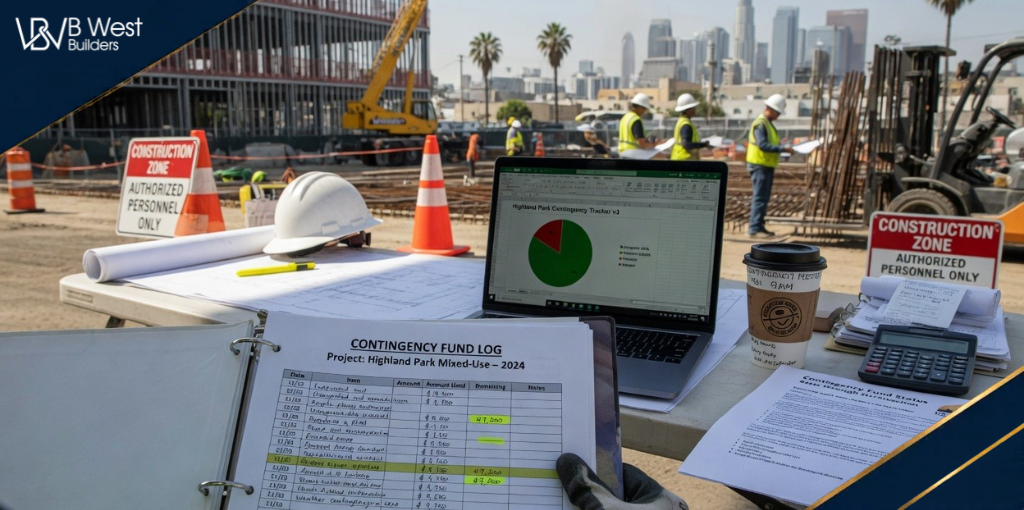
Keep a careful record, whether through easy spreadsheets or a specific app. Keep track of each time you take any money from your emergency or contingency fund, and for what. This transparency allows for budget monitoring as well as holding everyone accountable.
What You Should Not Use Your Contingency Fund For
What it isn’t is just as important as what it is. Using your contingency fund wrongly is pointless.
Upgrades to Planned and Scope Creep
Your contingency fund should not be used when you choose to upgrade from standard tiles to imported Italian marble. These are design choices or desires rather than unexpected needs. This type of upgrade should be obtained through a different budget or negotiated as a change to the original contract.
Kitchenware and Tableware
A contingency fund may be used for structural and fixed systems of your home. This money isn’t meant to be used for new appliances, furniture, window treatments, or decorative items that are not included in your contract. There should be dedicated line items in their budgets.
The Importance of a Construction Contingency Fund
You shouldn’t view budgeting for unexpected construction costs as bad planning; rather, a savvy investor will expect and protect against risk. Setting aside a contingency fund means any project nightmares are only small bumps in the road, and your renovation stays on track, quality is maintained, and your home’s value improves.
Here are the steps you can take:
- To help clients set realistic budgets, consider using these contingency percentages when preparing your estimates: 10% for new builds, 15-20% for major remodels, 25%+ for old or complicated jobs.
- Before signing any contract, have a detailed discussion with your selected contractor about the change order process.
- Open a separate bank account to store your emergency fund.
By being proactive, you will make one of the best investments possible for your peace of mind and your project.
Frequently Asked Questions About Construction Contingency Funds
What is a construction contingency fund?
A construction contingency fund is a dedicated portion of your project budget set aside to cover unforeseen expenses, changes, or unexpected issues that may arise during a renovation or new build. It acts as an insurance policy to keep your project on track and prevent financial distress.
How much should I budget for a construction contingency fund?
The recommended amount varies by project type. For new builds, 10% is standard. Major renovations typically require 15-20%, while older homes or complex projects with many unknowns might need 25-30% or more due to higher risk of hidden issues.
Ready to Transform Your Los Angeles Home?
Whether you choose to build up or build out, our expert team ensures a seamless, compliant, and value-adding home expansion.
Why Choose Our Construction Experts:
- Licensed & Insured Professionals
- Deep Expertise in LA Zoning & LADBS Procedures
- Transparent Pricing & Detailed Project Planning
- Proven Track Record of Client Satisfaction
Get Started Today:
- Call: (213) 410-4183
- Schedule: Book a complimentary property assessment online
- Special Offer: Get a detailed project estimate today!