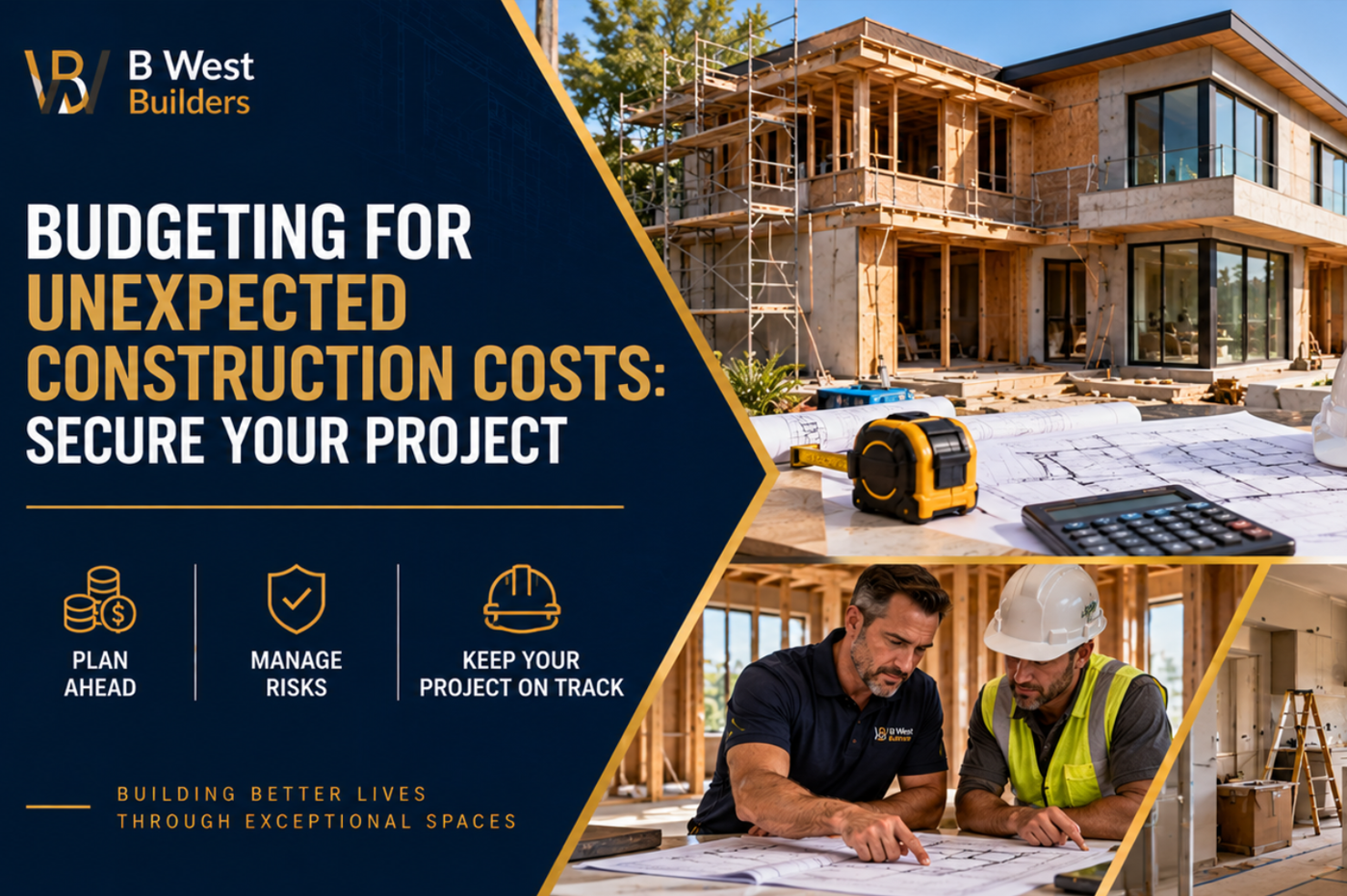

Do you want a custom home in Los Angeles? You are not alone. Many homeowners envision a custom-built space to suit their lifestyle. But before that first shovel breaks ground, a vital question emerges: What’s the true cost to build a new home in Los Angeles? While several sources offer a price-per-square-foot figure, Los Angeles is a different animal altogether. The true investment goes beyond the sticker price. It’s about understanding the individual components that make up your total project cost. This introduction helps you know how to make a realistic budget and choose the right products from day one of your journey.
Estimating the Cost of LA: General Estimates vs. the Real One
Understanding the realities is important if you are considering a new build in Los Angeles. While a general price range gives a sense of what to expect, it is very important to be aware that an average can be quite misleading. Your actual figure will depend on an infinite number of factors relative to your property and vision.

Cost-per-Square-Foot Range Meaning
In Los Angeles, the cost-per-square-foot for new home construction is very different. The construction cost for a basic functional house ranges from $350 to $500 per square foot for mid-range finishes. Once you go into semi-custom territory, which offers higher quality materials and more complicated designs, that range typically goes up to $550-$800 per sq. ft. Pricing for true luxury builds, featuring high-end imported finishes, state-of-the-art smart home systems, and intricate architectural details, can quickly exceed $900-$1500 per square foot and often far more.
Why Averages Might Not Tell the Truth
These averages are exactly that – averages. Even with the same square footage, the cost to buy a flat, easily accessible lot in Studio City will start at a much different number than the price to buy a difficult hillside lot in the Hollywood Hills. The final budget can be affected dramatically by the choice of materials, architectural complexity, and even the season in which permitting begins. Don’t allow a generic average to steer your initial budget.
The budget plan can be divided into two halves: hard costs and soft costs.
To understand the cost, we categorize your project into Hard Costs and Soft Costs. Hard Costs include the physical construction itself, from the foundation to the finishes. Soft Costs pertain to any service, fee, or planning that makes your build possible that isn’t part of the physical build itself. Both are very real and equally important to budget for.
Where Your Money Goes: Analysis of Hard Costs and Budget Allocation
The physical components of your new home are hard costs. Direct costs are the costs incurred for the labor, material, and equipment involved in the construction of the building.
Site Development and Base Construction
Prepping your land is the best way to start building. This phase consists of grading, excavation, and/or demolishing structures. Soil reports are analyzed by engineers and reviewed by the LADBS due to instability in the ground of a region. After that, the concrete foundation will be poured, which can include caisson systems for hillside properties. You should expect these costs to rise substantially on challenging or sloped lots, adding tens of thousands of dollars to the overall costs.
Construction of the Framing and Exterior Shell
In this space, the structure of your house will be created. The prices of lumber fluctuate but remain a major player here. Furthermore, the labor for the walls, floors, and roof is a critical element. Once the home is framed, it’s time for the shell: the roof, the high-performance windows, and the exterior finishings of stucco, brick, modern siding, or whatever else you prefer. These decisions affect not just overall appeal and energy efficiency; quality choices provide long-term benefits.
Interior and Major System Installation
The important Mechanical, Electrical, and Plumbing (MEP) systems are situated behind the walls. This encompasses the HVAC system as well as all electrical wiring, outlets, lighting, and plumbing. MEP rough-ins are followed by a layer of insulation, then drywalling and taping. Essentially, these systems are the guts of your home. So, investing in a quality product will prevent hefty repairs in the future.
Interior Finishing Work
This is where personal taste and budget can vary widely. Home renovation choices like flooring, custom cabinets, natural stone countertops, paint, and high-end lighting fixtures have a major impact on the final look and feel and cost. Consider vinyl plank flooring that the builder uses versus Italian marble that’s imported. Be sure to not neglect landscaping or hardscaping methods for the exterior, which can add value and curb appeal. The selection of these finishes is often the most significant driver of costs.
The Crucial Costs That Incur Through Activities Other Than Construction
Soft costs represent a significant portion of most projects, so watch out. These are the essential investments that make sure your new home construction project is legal, structurally sound, and well-engineered.
Architecture and Engineering Fees
A vision gives rise to the home, with which we will work. Architectural fees can range between 8 and 15% of the total hard construction cost. They cover design work, architectural blueprints, and construction documents. Los Angeles building codes require all structures to withstand seismic forces and fight against seismic hazards. You also need soil engineers as well as civil engineers for the site grading. Possibly, you need to hire a landscape architect.
Applying for City Permit and Fees
The permitting process in Los Angeles is complicated, and these fees are not negotiable. Construction permits, grading permits, or even school fees can add significant amounts to your budget. Construction proposals within certain areas, such as Hollywood Hills, may need traffic plans or hillside ordinances. A LADBS permit backlog could delay your timelines by 2 to 4 months. One step that is often ignored is ensuring your designs (or plans) are all set and accurate to prevent costly delays due to resubmission.
Funds for Incidentals and Insurance
Safeguard your investment above all. Course-of-construction insurance is to protect against accidents or damage while building is ongoing. It is important to always allow for a contingency fund, which we suggest is 10-15% for new builds, or up to 20% if it’s an older property or a difficult site. Hitches can occur, particularly due to things like an unforeseen site condition or a material price rise. Having a well-funded contingency protects your budget from these surprises.
The Location of Your LA Lot Greatly Impacts the Final Price
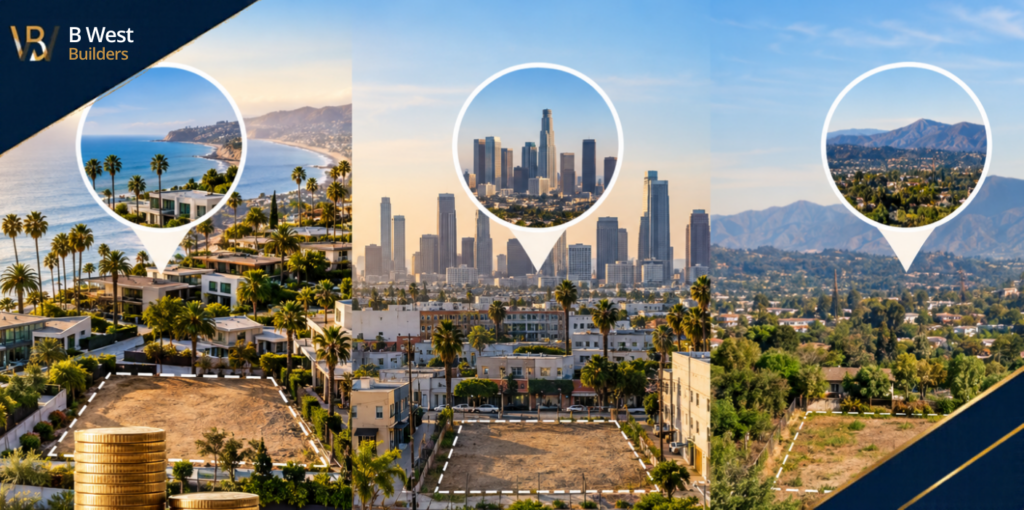
There is no one-size-fits-all when it comes to building in Los Angeles. The land itself presents unique challenges and costs that vary broadly based on location.
Hillside Construction or Flat Lots
Building costs on a flat lot in the Valley versus a hillside in Bel Air or the Hollywood Hills are vastly different. Because hillsides are not flat, you will find that hillside construction will require much more expensive engineering. Not to mention deeper foundation systems, retaining walls, and often, caisson systems to stabilize the construction. Delivering materials and accessing equipment become complicated and require special machinery and logistics. Count on these site-specific challenges to readily add 20 to 50 percent of your foundation and site work budget.
Regulations for the Coastal Belt and Fire Zone
Los Angeles has local building codes in special areas. According to stringent fire-resistant material requirements, homes in high fire-risk zones like Malibu Canyon or parts of the Pacific Palisades must use specific products for roofing, siding, and windows. Similarly, the properties located in the coastal zones of Venice or Santa Monica require corrosion-resistant materials and must comply with strict planning regulations so as not to harm the environment. While these specialized requirements add to the costs, they ensure long-lasting and smooth functioning and compliance.
Utility Connections and Access
Utility costs for linking your new house to water, sewer, gas, and electricity are often missed. When it comes to undeveloped lots, getting those services to the curb is often a trenching, street-cut exercise, and utility hook-up fees often apply. The cost of upgrading existing services or rerouting them on developed lots is high. Infrastructure budget includes these expenses as a crucial component.
The Builder’s Role: The Impact of Your Choice on Cost and Value
The choice of builder you make is probably one of the most crucial decisions that will have an impact not just on the initial cost but also on the potential value and success of your project. It’s not merely about the labor, but the skills to control a complex process.
Different Types of Builder Fees
Most builders will usually take either “fixed price” or “cost plus” contracts. A fixed-price contract is one where a lump sum is agreed for project delivery. It gives certainty with regard to budgeting. Nonetheless, it necessitates an exceedingly detailed blueprint beforehand. A builder using a “cost-plus” model charges you for the materials and labor at cost, plus a set fee or percentage. This can give flexibility for very specialized projects, but diligent oversight is needed. Familiarize yourself with the financial modeling used by your builder.
Experience Brings Great Value in Cost Management
An experienced builder is your best protection against going over budget. They have an established relationship with subcontractors. This may allow them to get better rates. They’re great at scheduling things efficiently to avoid costly delays and are also experts at the confusing LA permitting process, so you save time and money. At B West Builders, we have delivered successful projects across LA hundreds of times in the past. This equips us to anticipate problems, streamline our work, and deliver on time and budget. We find that analysis teamed with proactive planning will save weeks off the timeline and tens of thousands off the budget.
Potential Builders and Your Budget – Asking the Right Questions
The right questions empower you before making a commitment. By asking about change orders and impact on budget, builder fees and allowances, budget updates and frequency, and contingency recommendation, you will know how the builder will act if there are change orders, what’s included in the base price versus what’s an allowance, whether the builder will provide detailed updates and how often, and what their typical recommendation for contingency on a project similar to yours. If the builder answers these questions openly and freely, it is clear that they are transparent and have your budgetary best interests at heart.
Let’s Pull These Ideas Together: A Sample Budget for a New Custom Home in Los Angeles
This creates a mental image of how you’ll be allocating your money.
Scenario: A 3,000 Sq. Ft. Bespoke Residence in Studio City
Consider designing a semi-custom home, roughly 3,000 square feet in size, on a practically level lot in Studio City. We are looking at a mid to high quality with some luxury features like a gourmet kitchen and bathroom upgrades, but not a full bespoke design.
Example Budget Breakdown (by Percentage)
For a project of this magnitude, the allocation may look something like this.
- Hard Costs amount to around 65%.
- Site Work & Foundation: 8-10%
- The exterior shell will cost you approximately 15-20%.
- MEPs & Interiors: 15-20%
- Inside and outside work: 15-20%
- Soft Costs: approximately 15-20%.
- Architecture and Engineering: 8 to 12%
- City permits or licensing costs: 3-5%
- Surveys and Reports: 1-3%.
- Builder Fee: 10-12%.
- Budget Contingency Fund: 10-15% of the total.
Total Project Cost Example: $1.8 Million
The total project cost of a build that is $600/sq. ft. and amounts to $1.8 million means that you will spend about $1.17 million on physical construction, and $270,000-$360,000 in plans and permits, with the remainder – $270,000 – going to the builder and your crucial contingency.
Main Takeaways from the Demonstration
As detailed in the above breakdown, soft costs typically account for a large and unavoidable portion of your budget, often as high as 15-20% before construction costs. Also, it shows how your choices in finishes can greatly affect your percentage of hard costs. The message to be conveyed is clear: this is an example. Every single project is different; detailed estimates will help us realize your vision.
Your Los Angeles Home Is Waiting for You to Build It!
Constructing a new house in Los Angeles is a significant ask. But if you know what you are doing and are strategic, it is also remarkably rewarding. The true cost is not just the square footage; it also includes complex hard costs, necessary soft costs, the unique aspects of your chosen lot, and your builder’s expertise.
The ultimate cost to build a new home in Los Angeles may be hefty, but a carefully thought-out plan will guarantee a worthwhile, long-lasting investment. Handpick your new property with certainty. Get in touch with the team at B West Builders for an in-depth consultation based on your specific requirements and site. Rely on our seasoned expertise, which will guide you step by step to help you realize your Los Angeles dream home.
Frequently Asked Questions About Building a New Home in Los Angeles
What is the average cost per square foot to build a new home in Los Angeles?
The cost per square foot to build a new home in Los Angeles varies significantly. Basic functional homes with mid-range finishes typically range from $350 to $500 per square foot. Semi-custom homes with higher quality materials can be $550-$800 per sq. ft., while luxury builds often exceed $900-$1500 per square foot.
What are the main differences between hard costs and soft costs in home construction?
Hard costs refer to the physical construction components of your home, including materials, labor, and equipment for the foundation, framing, and finishes. Soft costs, on the other hand, are non-physical expenses such as architectural and engineering fees, city permits, surveys, reports, and insurance, all essential for legal and sound construction.
How much should I budget for architectural and engineering fees in LA?
Architectural and engineering fees in Los Angeles typically range between 8% and 15% of the total hard construction cost. These fees cover design work, blueprints, construction documents, and specialized engineering for seismic requirements, site grading, and potentially landscape architecture.
How does lot location, like a hillside, affect building costs in Los Angeles?
Building on a hillside lot in Los Angeles significantly increases costs compared to a flat lot. Hillside construction requires more expensive engineering, deeper foundation systems, retaining walls, and often caisson systems for stabilization. Material delivery and equipment access also become more complex, potentially adding 20% to 50% to your foundation and site work budget.
What is a recommended contingency fund percentage for a new home build in LA?
It is highly recommended to allocate a contingency fund of 10-15% for new home builds in Los Angeles. For older properties or particularly difficult sites, this percentage can increase to 20%. This fund protects your budget from unforeseen site conditions, material price increases, or other unexpected hitches during construction.
How can an experienced builder help manage the cost of my LA home project?
An experienced builder is crucial for cost management by leveraging established subcontractor relationships for better rates and efficient scheduling to avoid delays. They are also experts in navigating LA's complex permitting process, saving both time and money. Their proactive planning can prevent costly surprises and keep your project on budget.
Ready to Build Your Dream Home in Los Angeles?
Transform your vision into a stunning reality with expert guidance and transparent planning.
Why Choose B West Builders:
- Seasoned Expertise in Los Angeles Custom Home Construction
- Proactive Planning to Anticipate Problems and Streamline Work
- Commitment to Delivering Projects On Time and On Budget
- Transparent Communication and Detailed Budget Updates
Get Started Today:
Call: (213) 410-4183
Schedule: Book a complimentary property assessment online
Serving Los Angeles homeowners with unparalleled quality and dedication. Licensed & Insured.